Brunch Is a Genre, Not a Meal
Brunch didn't exist as a formal concept until the late 19th century, and eggs Benedict has been tangled up in its origin story from close to the start. The most repeated account credits a Wall Street broker named Lemuel Benedict, who in the 1890s wandered into New York's Waldorf Hotel with a hangover and ordered buttered toast, poached eggs, crisp bacon, and a side of hollandaise to fix what ailed him. The maître d' liked it enough to put a version on the menu, swapping toast for an English muffin and bacon for ham — and the dish has barely changed since.
The Hollandaise Is the Hard Part
Hollandaise is an emulsion of egg yolk, melted butter, and lemon juice, whisked together slowly enough that the fat suspends evenly in the egg rather than separating out. It's notoriously easy to break — add the butter too fast, let the mixture get too hot, or let it sit too long off heat, and the sauce splits into a greasy, curdled mess instead of staying smooth and pourable. A properly made hollandaise should coat the back of a spoon in a thin, even layer and taste bright with lemon rather than simply rich, which is the tell that the acid-to-fat ratio was actually balanced rather than eyeballed.
Poaching an Egg Without a Special Tool
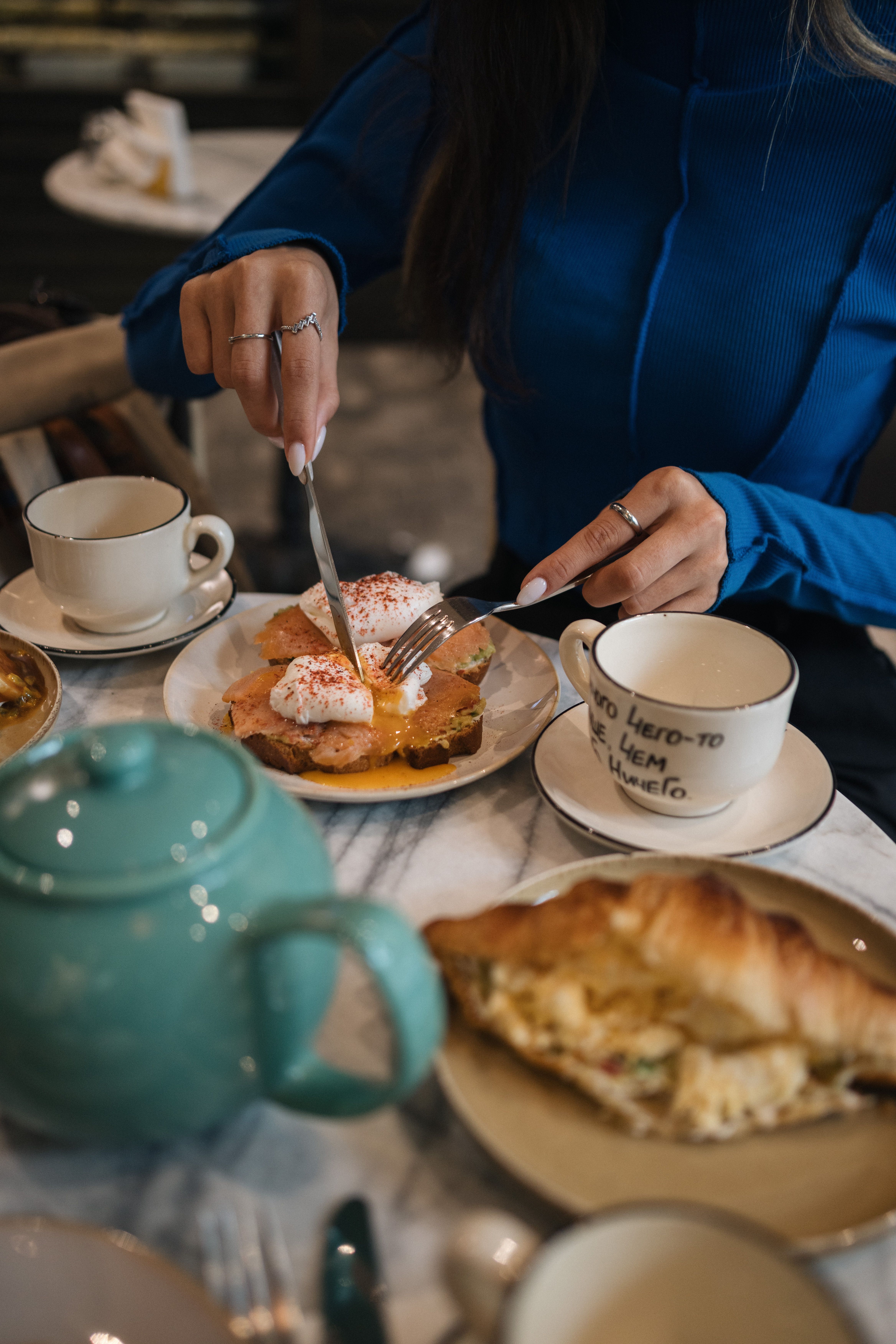
A poached egg needs just barely simmering water, a small swirl to create gentle motion, and fresh eggs — older eggs have thinner whites that spread out into wisps instead of holding together around the yolk. A splash of vinegar in the water helps the whites set faster, reducing how much time the egg spends drifting before it firms up. The goal is a fully set white with a yolk that's still liquid at the center, which is what creates the second sauce on the plate once the fork breaks through.
Why English Muffins, Specifically
An English muffin's nooks and crannies — the small pockets created by its unique fermentation and griddle-baking process — aren't decorative. They exist to catch butter, and by extension, to catch the drips of hollandaise and yolk that a smoother bread would just let slide off. Toasted properly, the muffin holds its structure under a wet poached egg and sauce without turning soggy in the first few bites, doing the same structural job a good burger bun does under a juicy patty.
The Benedict Family Tree
Once the base formula was established — muffin, protein, poached egg, hollandaise — it became a template rather than a fixed recipe. Swap Canadian bacon for smoked salmon and it becomes eggs royale. Swap it for spinach and it's eggs Florentine. Crab, avocado, and pulled pork have all found their way into the format over the years. The variations work because the structure underneath — starch, protein, egg, sauce — is flexible enough to carry almost anything savory without losing what makes the dish work.
What Separates a Good Benedict From a Great One
Timing is everything, since all four components — toasted muffin, cooked protein, poached egg, and hollandaise — have to hit the plate warm and fresh at the same moment, or the whole dish falls out of balance. A great Benedict has a hollandaise that's still glossy and pourable, not stiff or broken; an egg that runs the moment it's cut; and a muffin that's crisp enough on the outside to hold everything without going limp underneath.
Try It at Gastro Bar and Restaurant
The American breakfast menu serves classic eggs Benedict alongside a full brunch spread, from fresh-poached eggs to house-made hollandaise. View the full menu or order online.