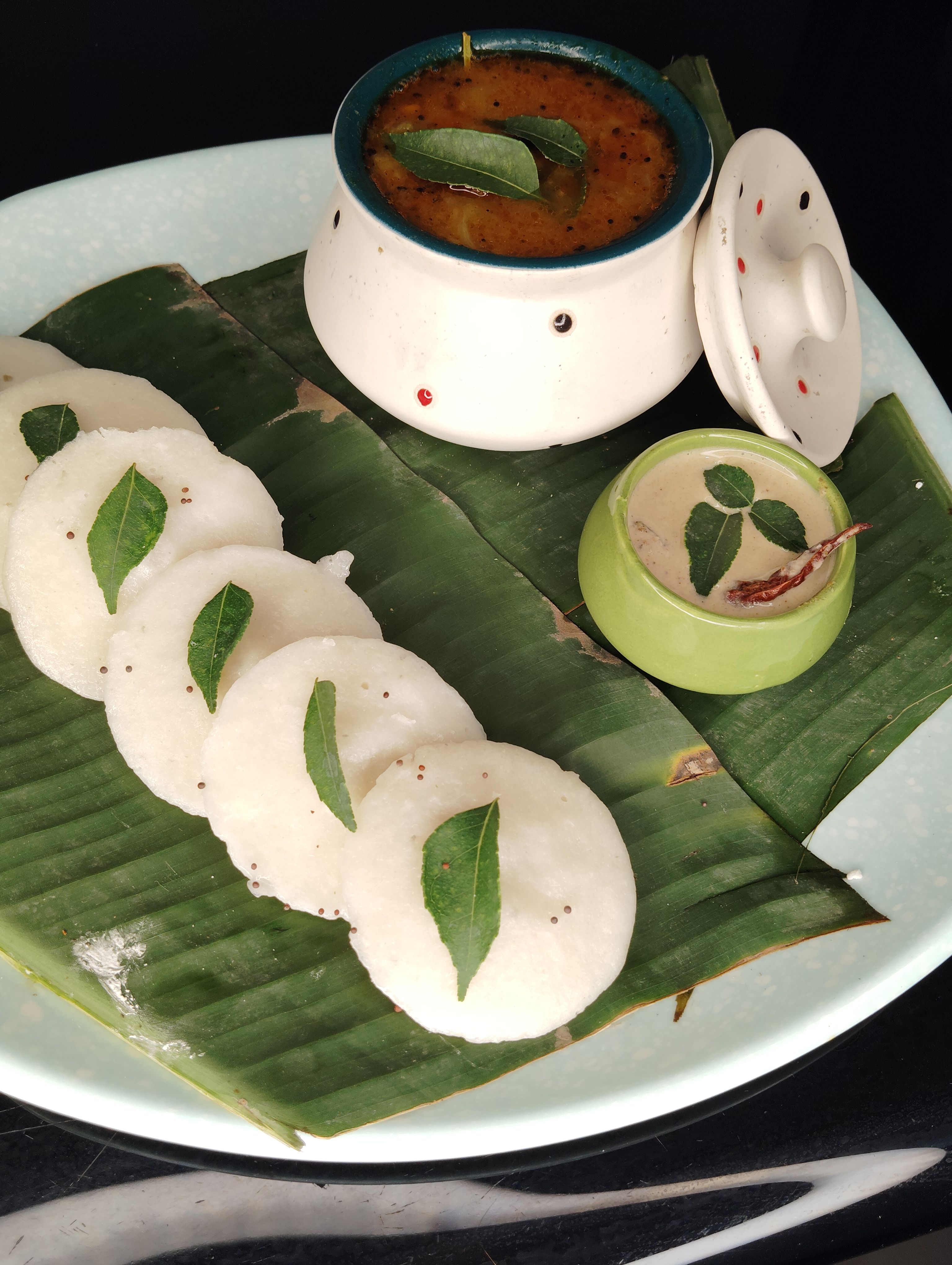
Steamed, Not Fried, Not Griddled
Of all the ways South Indian cooking transforms fermented rice and lentil batter, idli is the gentlest. Where dosa hits a hot griddle and crisps, idli is ladled into molds and steamed, resulting in something soft, spongy, and almost cloud-like rather than crisp at the edges. It's one of the few staple breakfast foods in any cuisine that contains essentially no added fat in the cooking process itself — the lightness is a product of technique, not restraint.
The Same Batter as Dosa, Cooked Differently
Idli and dosa start from the same place: rice and urad dal, soaked, ground, and left to ferment overnight. The batter for idli is typically kept slightly thicker than dosa batter, since it needs to hold its shape in a mold rather than spread thin across a griddle. That single adjustment in consistency, paired with steam instead of direct heat, is the difference between two dishes that read as completely unrelated on a plate but share a single bowl of batter in the kitchen.
Why the Mold Matters
Idli is steamed in a stacked mold with shallow, disc-shaped compartments, traditionally lined with a leaf or greased lightly to prevent sticking. The shape isn't just aesthetic — the shallow depth allows steam to penetrate evenly all the way through in a matter of minutes, which is part of why idli cooks so quickly compared to other steamed breads and cakes. A too-deep mold would leave the center dense and undercooked while the edges turned rubbery.
Sambar and Chutney, Reconsidered
Idli is rarely eaten alone, and for good reason: on its own it's mild, almost neutral, built to be a canvas rather than the main event. Sambar, the tangy lentil and vegetable stew shared with dosa, adds warmth and heartiness, while coconut chutney adds fat and a cooling contrast. The idli's job is to soak up both without falling apart — a well-fermented, properly steamed idli holds its structure even after a full dunk in sambar, while a poorly made one turns to mush.
Podi: The Dry Chutney Most People Miss
Alongside sambar and coconut chutney, many South Indian kitchens serve idli with podi — a dry, coarse spice powder made from roasted lentils, dried chiles, and sesame, mixed with a bit of oil or ghee at the table. It's a texture and flavor addition that first-time diners often skip simply because it doesn't look like a sauce, but a spoonful stirred into the accompanying ghee turns into a nutty, savory paste that's essential to how the dish is traditionally eaten in much of Tamil Nadu and Karnataka.
What a Good Idli Feels Like
Texture is the whole test. A properly fermented, correctly steamed idli should be light enough to leave an indent when pressed gently with a finger, then spring back — a sign of even aeration from fermentation, not just baking powder standing in for the real process. Dense, gummy idlis usually mean the batter didn't ferment long enough or the rice-to-lentil ratio was off; a good one should feel almost weightless on the fork.
Try It at Gastro Bar and Restaurant
The South Indian kitchen ferments its idli and dosa batter fresh in-house, served with sambar, coconut chutney, and podi the traditional way. View the full menu or order online.