A Cheese Built to Hold Its Shape
Paneer is a fresh, non-aged cheese made by curdling hot milk with an acid like lemon juice or vinegar, then draining and pressing the curds into a firm block. Unlike most cheeses, it contains no rennet and isn't aged or cultured, which is why it has a mild, milky flavor rather than a sharp or funky one. Its defining trait is structural: paneer holds its shape under high heat instead of melting, making it as suited to grilling and frying as to simmering in a curry for an hour.
Why It Doesn't Melt
Most cheeses melt because their protein structure loosens with heat, allowing fat and moisture to flow. Paneer's proteins are denatured early, during the acid-curdling process itself, which locks the curd into a firm structure before it ever meets a stove. That's why a paneer cube can be seared, skewered, or dropped into a bubbling gravy and still come out intact — the transformation that would normally happen during cooking already happened in the pot.
Fresh vs. Store-Bought
Fresh, same-day paneer has a softer, slightly spongy texture and a cleaner dairy flavor, since it hasn't had time to firm up excessively or pick up flavors from packaging. Store-bought paneer, pressed longer and often refrigerated for days, tends to be denser and slightly rubbery unless it's soaked in warm water before use, a common trick that softens the texture back toward fresh.
Paneer Tikka and the Marinade's Job
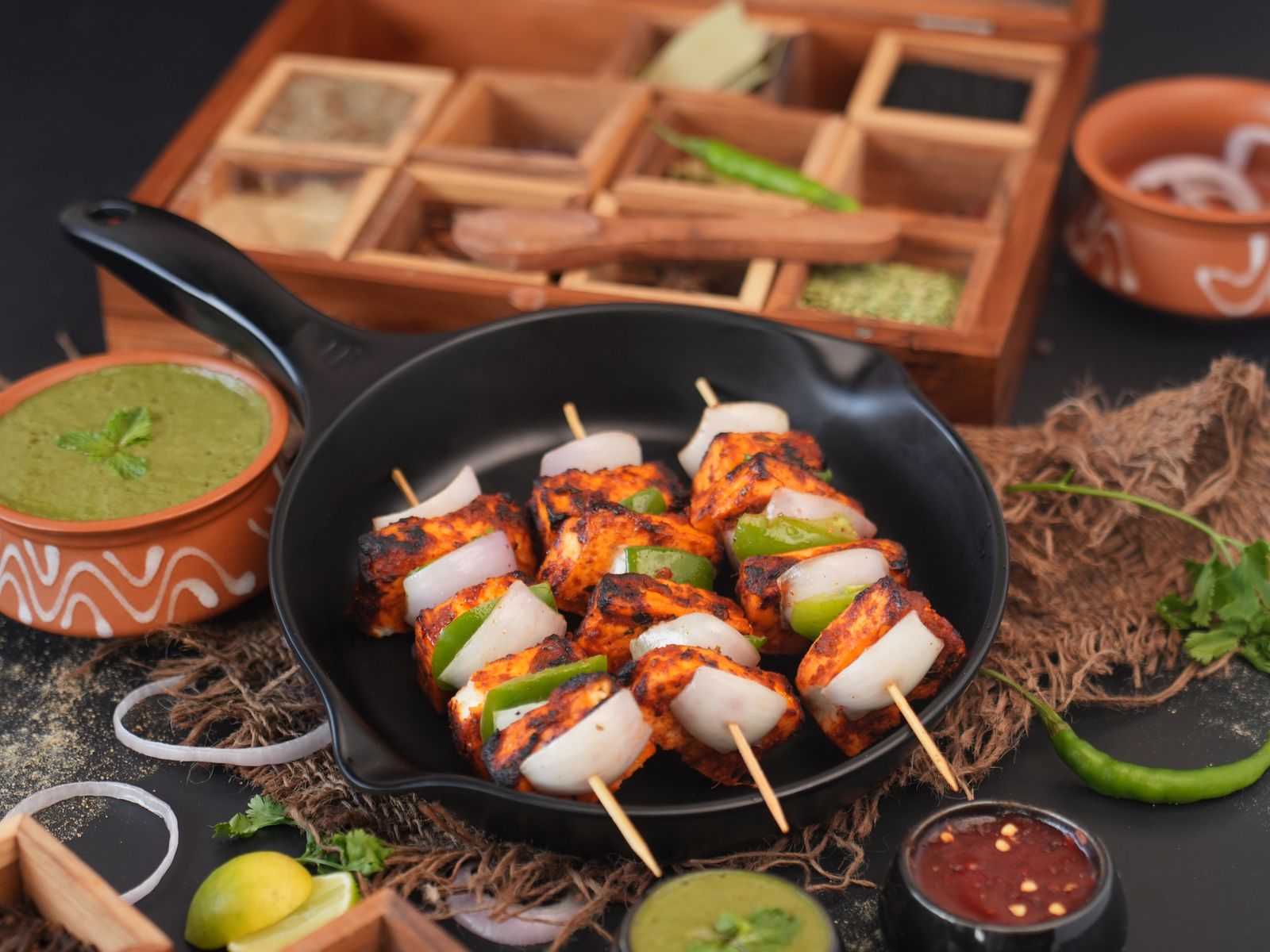
Paneer tikka marinates cubes of the cheese in yogurt, ginger, garlic, and a blend of ground spices before grilling or roasting, usually skewered alongside onion and bell pepper. Because paneer itself doesn't absorb flavor quickly — it has no cracks or fat pockets the way meat does — the marinade needs real acid and time to coat the surface properly, and the paneer benefits from a light char that a plain cube never develops on its own.
Not Just a Meat Substitute
It's easy to think of paneer as a vegetarian stand-in for chicken or lamb, but it's been a staple of North Indian cooking on its own terms for centuries, independent of any substitution. Dishes like shahi paneer, built on a rich cashew and tomato gravy, or saag paneer, folded into pureed greens, are built around paneer's specific texture and mildness, not designed to mimic another protein's role in a dish.
What a Good Piece Should Look Like
Well-made paneer should be firm enough to hold a skewer without crumbling, but still yield easily to a fork or knife — not rubbery, not dry. On the grill, it should pick up real char marks rather than staying pale, a sign the marinade had enough sugar and acid to caramelize under heat. In a gravy, it should stay intact rather than disintegrating into the sauce.
Try It at Gastro Bar and Restaurant
The North Indian kitchen marinates and grills paneer tikka fresh, alongside shahi paneer and saag paneer made from scratch daily. See the North Indian menu or order online.