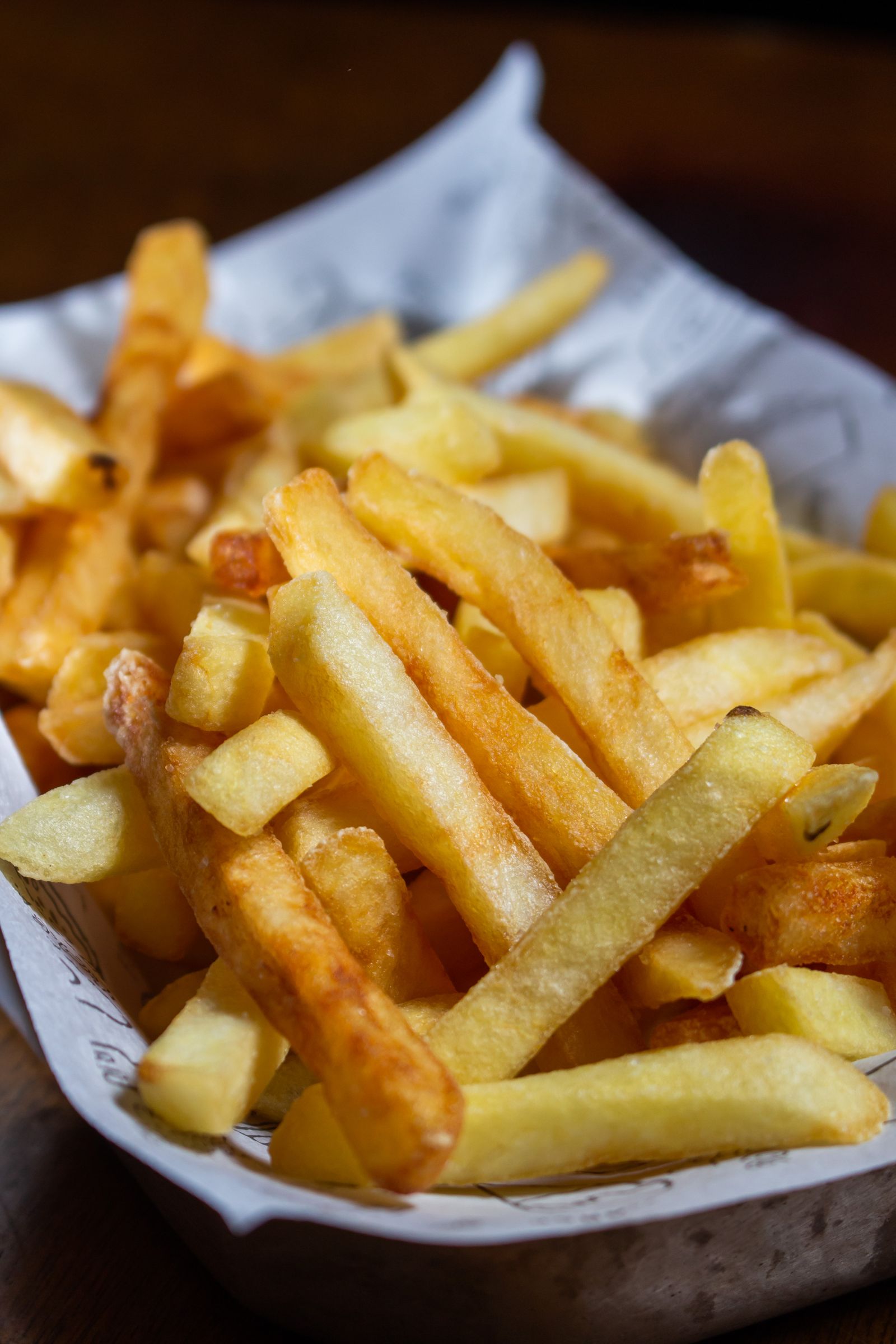
A Fry Is Actually Cooked Twice
The single biggest difference between a limp fry and a genuinely crisp one is the double fry, a technique nearly every serious kitchen relies on. The first fry, done at a lower temperature around 300°F, cooks the potato through and drives out moisture without browning the surface. The second fry, at a much hotter 375°F or higher, is purely about the crust — it's short, fast, and exists only to shatter the exterior while the inside stays soft. Skipping the first stage is the most common reason home fries turn out soggy no matter how hot the oil gets.
Starch and Water Are the Real Ingredients
A potato is mostly starch and water, and both have to be managed for a fry to crisp properly. Soaking cut potatoes in cold water before frying rinses away surface starch that would otherwise trap steam and prevent browning. It also firms up the potato's structure, which is why fries that skip the soak often turn out pale and limp rather than golden and rigid.
Why Temperature Control Matters More Than Timing
Frying is really a moisture-removal process — hot oil boils the water inside the potato until the surface dries out enough for the Maillard reaction, the browning process that builds flavor and crunch, to take over. Oil that's too cool cooks the fry slowly enough that it absorbs excess grease before it browns, resulting in a heavy, oily fry. Oil that's too hot burns the surface before the inside finishes cooking. A thermometer, not a clock, is the more reliable tool here.
The Cut Changes the Eating Experience
A thin shoestring fry has a high surface-area-to-volume ratio, meaning more of it crisps and less of it stays soft — the trade-off is that it cools and softens fast once plated. A thick steak fry keeps a fluffier, more potato-forward interior but takes longer to cook through and crisps less aggressively on the outside. Neither cut is objectively better; they're built for different textures and different sauces.
Salt Timing, Again
Just like guacamole, timing matters for salt on a fry — salted straight out of the fryer while the surface oil is still hot, the salt adheres evenly instead of sliding off a cooled, dry surface. Salting too early, before frying, draws out moisture the same way it does with any vegetable, working against the crisping process rather than helping it.
What Separates a Great Fry From an Average One
A properly made fry should have an audible crackle when bitten, a light golden color rather than pale or dark brown, and a fluffy, steaming interior that contrasts with the crisp shell. If a fry goes soft within a few minutes of hitting the table, the double fry was likely skipped or the oil wasn't hot enough on the second pass.
Try It at Gastro Bar and Restaurant
The American kitchen double-fries every batch fresh to order, never held under a heat lamp. See the American menu or order online.