It's Not a Recipe Problem, It's a Ripeness Problem
Most disappointing guacamole was never a matter of the wrong recipe — it was made with the wrong avocado. A truly ripe Hass avocado gives slightly under gentle palm pressure and reveals a deep green, almost yellow flesh once cut, with no grey or stringy patches near the pit. An underripe avocado mashes into a hard, grassy paste no amount of lime or salt can fix, while an overripe one turns muddy and bitter. Good guacamole starts at the produce stand, days before a knife ever touches the fruit.
The Chemistry of Browning
Avocado flesh browns through oxidation, the same reaction that turns a cut apple brown, triggered when an enzyme called polyphenol oxidase meets oxygen in the air. Lime juice slows this down because its acidity temporarily deactivates the enzyme, which is why guacamole made without enough acid turns grey within the hour. Pressing plastic wrap directly onto the surface, rather than draping it over the bowl, works for the same reason — it physically blocks the oxygen the reaction depends on.
Salt Timing Changes Texture
Salt draws moisture out of cut vegetables through osmosis, which is useful in a tomato but a liability in an avocado. Salting too early pulls excess water out of the flesh and dilutes the guacamole's texture, leaving it thinner and less rich than it should be. The better sequence is to mash the avocado first, fold in the aromatics, and salt close to serving, so the water content stays where it belongs.
Chunky vs. Smooth Is a Real Choice
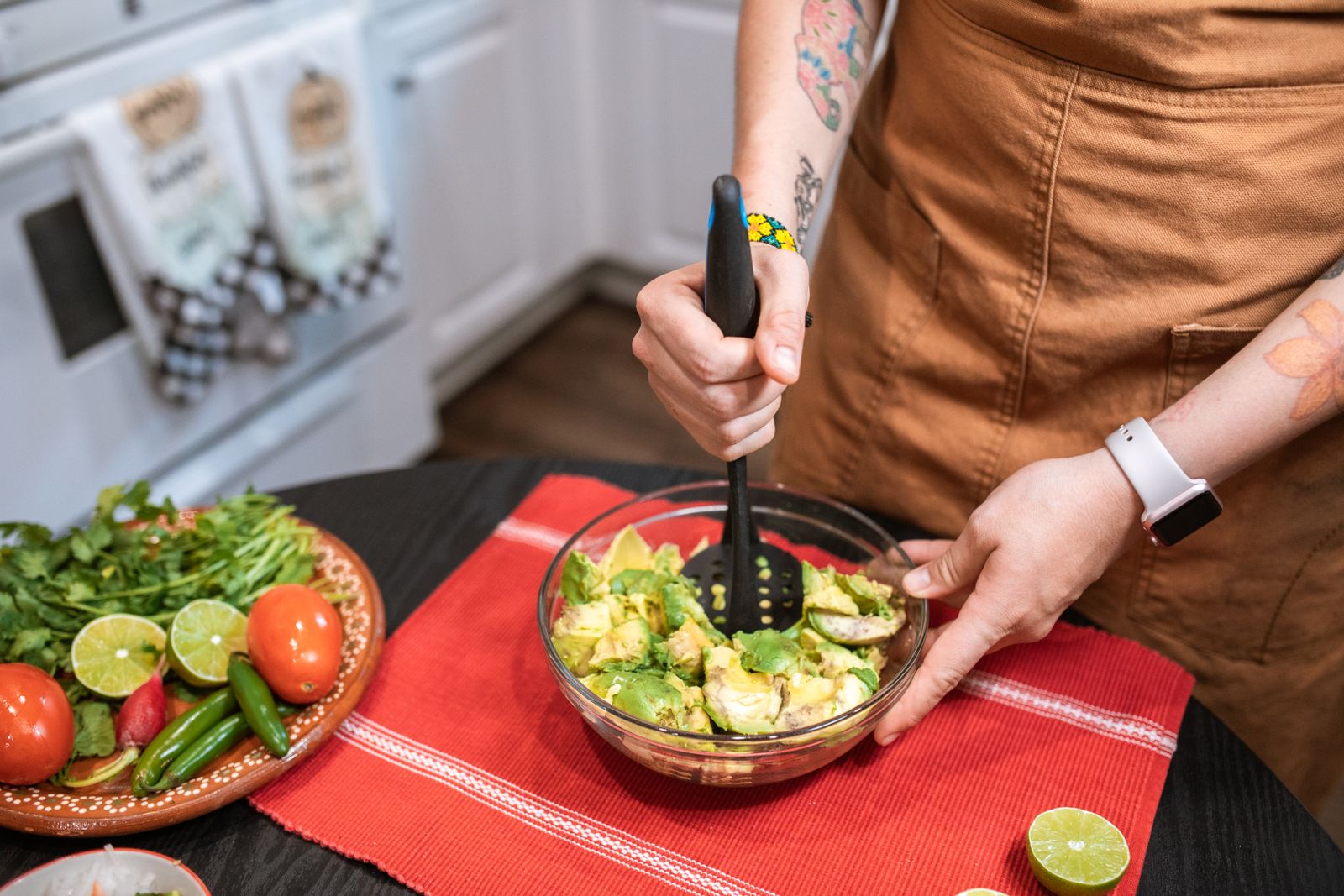
There's a genuine textural decision buried in every batch: mash smooth and the guacamole eats more like a spread, clinging evenly to a chip. Leave it chunky and every bite carries a different ratio of creamy avocado to sharp onion and tomato. Neither is more correct — a molcajete, the traditional volcanic stone mortar, is built to crush rather than puree, which is part of why traditional guacamole tends to stay rustic and uneven rather than silky.
The Lime Isn't Just Flavor
Lime does three jobs at once: it slows browning, cuts the richness of the fat, and sharpens every other flavor in the bowl. Too little and the guacamole tastes flat and heavy; too much and the acid overwhelms the avocado's own flavor, which is mild and slightly nutty on its own. The right amount should be felt as brightness, not sourness — if the lime is the first thing you taste, there's too much of it.
What to Look For
Good guacamole should hold its shape on a chip without sliding off, with visible flecks of onion, cilantro, and tomato rather than a uniform green paste. The color should stay vivid, a sign it was made close to serving and acidified properly. And it should taste like avocado first — onion, chile, and lime are there to frame the fruit, not replace it.
Try It at Gastro Bar and Restaurant
The Mexican kitchen makes guacamole to order with fresh-cut avocado, lime, and cilantro, never pre-mashed or held under a heat lamp. See the Mexican menu or order online.