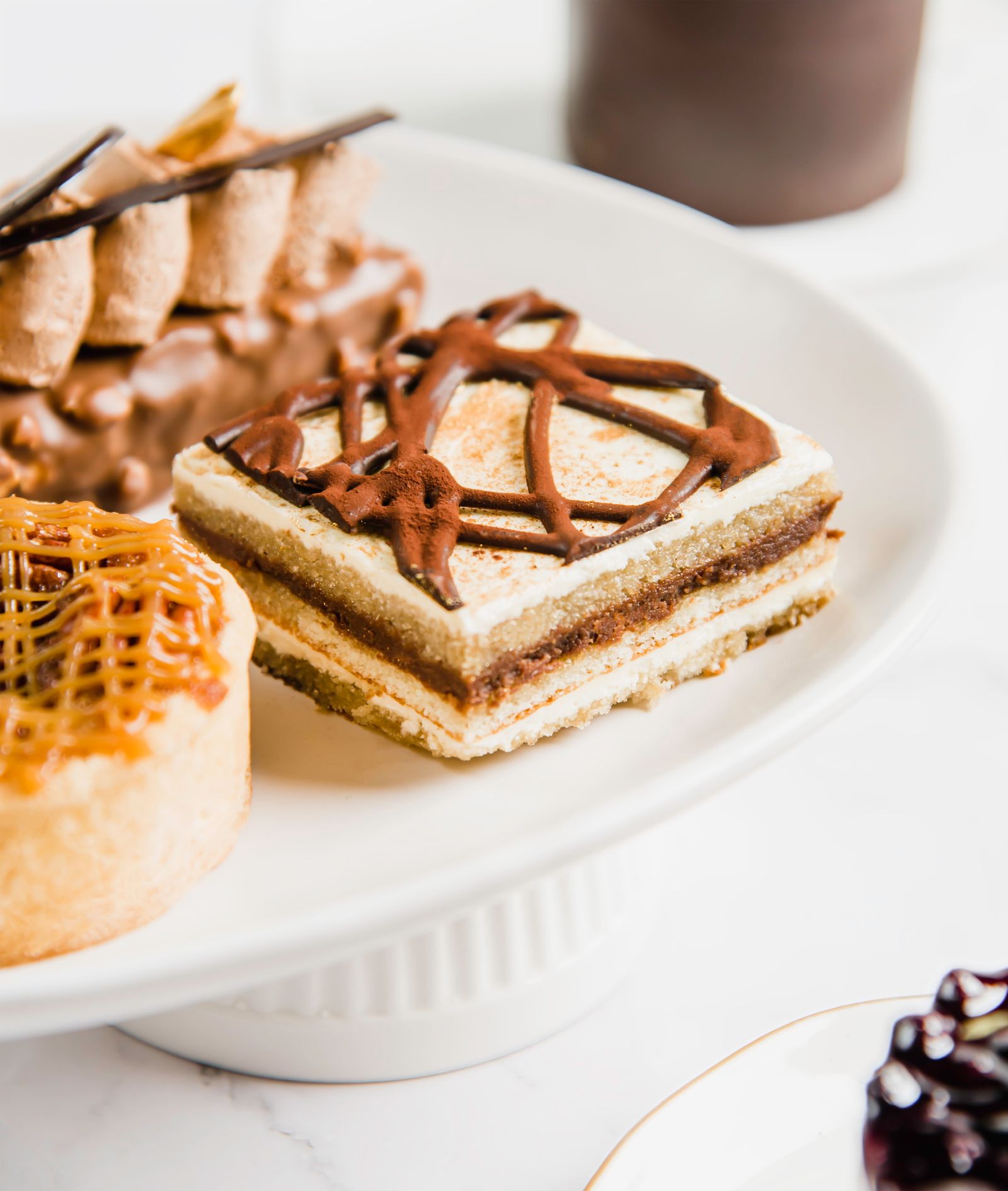
A Dessert Named for What It's Supposed to Do
Tiramisu translates roughly to "pick me up," a reference to the jolt of espresso layered through every bite. It's a relatively young addition to Italian cooking, with most food historians tracing its modern form to restaurants in the Veneto region in the late 1960s, built from older Italian traditions of spoon cakes and egg-based creams. Its whole identity rests on a handful of components working together, not any single showstopping ingredient.
Mascarpone Isn't Optional
Mascarpone is a high-fat, mild Italian cream cheese, and it's what gives tiramisu its distinctive richness without the tang of cream cheese made in the American style. Substituting a tangier cheese changes the dessert's entire character, pulling it away from the smooth, faintly sweet flavor tiramisu is built around. The mascarpone is typically folded into a base of egg yolks whipped with sugar, called a zabaglione, which adds airiness and a custard-like depth.
The Soak Is a Precision Problem
Ladyfingers, or savoiardi, are dry, sturdy cookies designed specifically to absorb liquid without collapsing. Dipped too briefly in espresso, they stay dry and chalky at the center. Dipped too long, they turn to mush and release too much liquid into the layers below, making the final dessert soupy instead of sliceable. A quick one-to-two second dip per side is usually enough — the ladyfinger should soften on contact with a fork, not before.
Raw Eggs, Handled Correctly
Traditional tiramisu relies on raw or gently heated egg yolks for its cream, which is part of why the zabaglione step matters — whisking yolks and sugar over a double boiler, or with hot syrup, brings the eggs to a food-safe temperature while keeping them light and airy rather than scrambled. Skipping this step in favor of fully raw yolks is a genuine food safety consideration many modern kitchens now address directly.
Why It Needs to Rest
Tiramisu is traditionally refrigerated for several hours, often overnight, before serving — not just for food safety, but because the layers need time to meld. Fresh out of assembly, the mascarpone layer and the soaked ladyfingers taste like separate components; after a proper rest, the espresso, cream, and cocoa integrate into a single flavor rather than three distinct ones stacked on a plate.
What to Look For on the Plate
A well-made tiramisu holds a clean edge when sliced, with visible, distinct layers rather than a collapsed, soupy mass. The cocoa dusting on top should be fine and even, added just before serving so it doesn't clump or dissolve into the cream. It should taste balanced — coffee first, sweetness second, with the mascarpone's richness rounding out the finish rather than dominating it.
Try It at Gastro Bar and Restaurant
The Italian kitchen makes tiramisu in-house daily, rested overnight for the layers to fully set. See the Italian menu or order online.