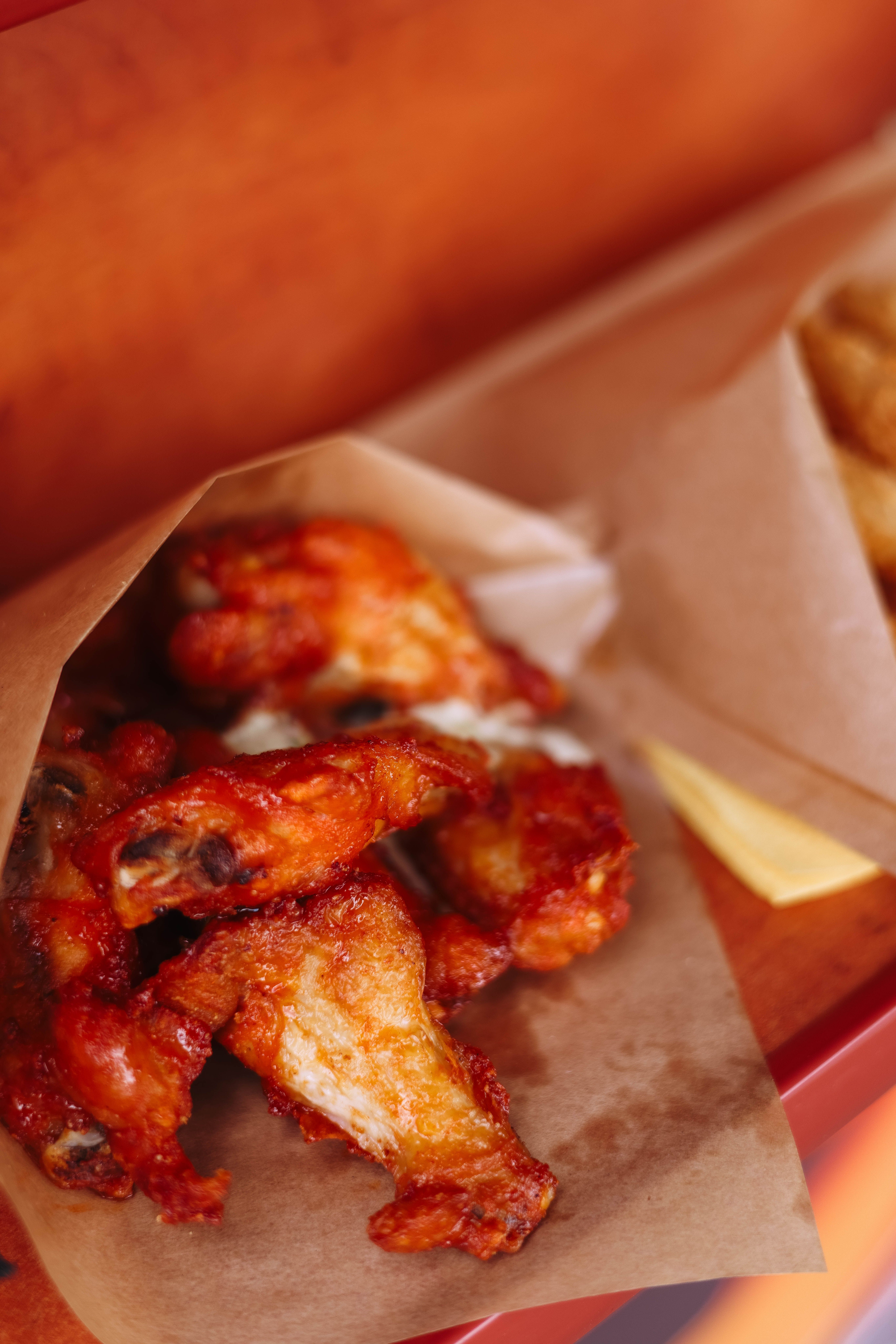
The Wing Didn't Used to Be a Menu Item
Chicken wings spent decades as an afterthought, typically ground into stock or discarded in favor of breast and thigh meat. That changed in Buffalo, New York in 1964, where the Anchor Bar is widely credited with frying wings whole and tossing them in a cayenne-butter sauce for the first time — turning a scrap cut into what's now one of the most ordered items on American menus. The dish's entire identity is built on that origin story: fried hot, sauced simple, served with celery and blue cheese to cut the heat.
Flats vs. Drums, and Why It Matters
A whole wing is actually three sections: the drumette, which looks and eats like a miniature drumstick; the flat, or wingette, with two thin bones running through it; and the tip, usually discarded or saved for stock. Drums are meatier and easier to eat, which is why they're often preferred, but flats have a higher skin-to-meat ratio, meaning more surface area for crisping and more sauce clinging per bite. A kitchen that serves both, evenly cooked, is paying attention to a distinction a lot of diners never consciously notice but definitely taste.
The Double-Fry (or Double-Cook) Principle
Wings have a moisture problem: they're covered in skin, which needs high, sustained heat to render its fat and crisp properly, but the meat underneath is thin enough to overcook quickly if that heat is applied all at once. The fix most serious kitchens use is a two-stage cook — a lower-temperature fry or bake to render fat and cook the meat through, followed by a second, hotter fry or broil just before serving to shatter the skin. Skipping the second stage is the most common reason restaurant wings come out flabby instead of crisp.
Sauced vs. Dry-Rubbed
Classic Buffalo-style wings are tossed in a butter-based hot sauce immediately after frying, while the skin is still hot enough to absorb it without going soggy. Dry-rubbed wings skip the toss entirely, relying on a spice blend applied before or after cooking to build flavor without adding moisture back onto crisp skin. Neither approach is objectively better — sauced wings deliver a more immediate, aggressive flavor hit, while dry rub preserves crunch longer, which matters if the wings are going to sit for even a few minutes before reaching the table.
The Blue Cheese Question
Ranch has crept onto plenty of wing baskets, but blue cheese is the traditional pairing for a reason rooted in chemistry, not just habit — its funk and fat cut through capsaicin, the compound responsible for a hot sauce's burn, more effectively than a milder dressing does. A properly made blue cheese dip should be chunky, tangy, and thick enough to actually coat a wing rather than run off it, since a thin dip disappears before it can do its job against real heat.
How to Judge a Wing
The tell is in the skin. Bite into a well-cooked wing and the skin should offer real resistance before giving way to tender meat underneath — a light crackle, not a soft give. If the skin is uniformly soft all the way through, the second cook was skipped or the oil wasn't hot enough. Sauce should cling in an even coat rather than pooling at the bottom of the basket, a small sign the wings were tossed properly while still hot.
Try It at Gastro Bar and Restaurant
The Burgers & Wings kitchen double-cooks every wing before tossing it hot, with both classic Buffalo and dry-rub options on the menu. See the Burger & Wings menu or order online.